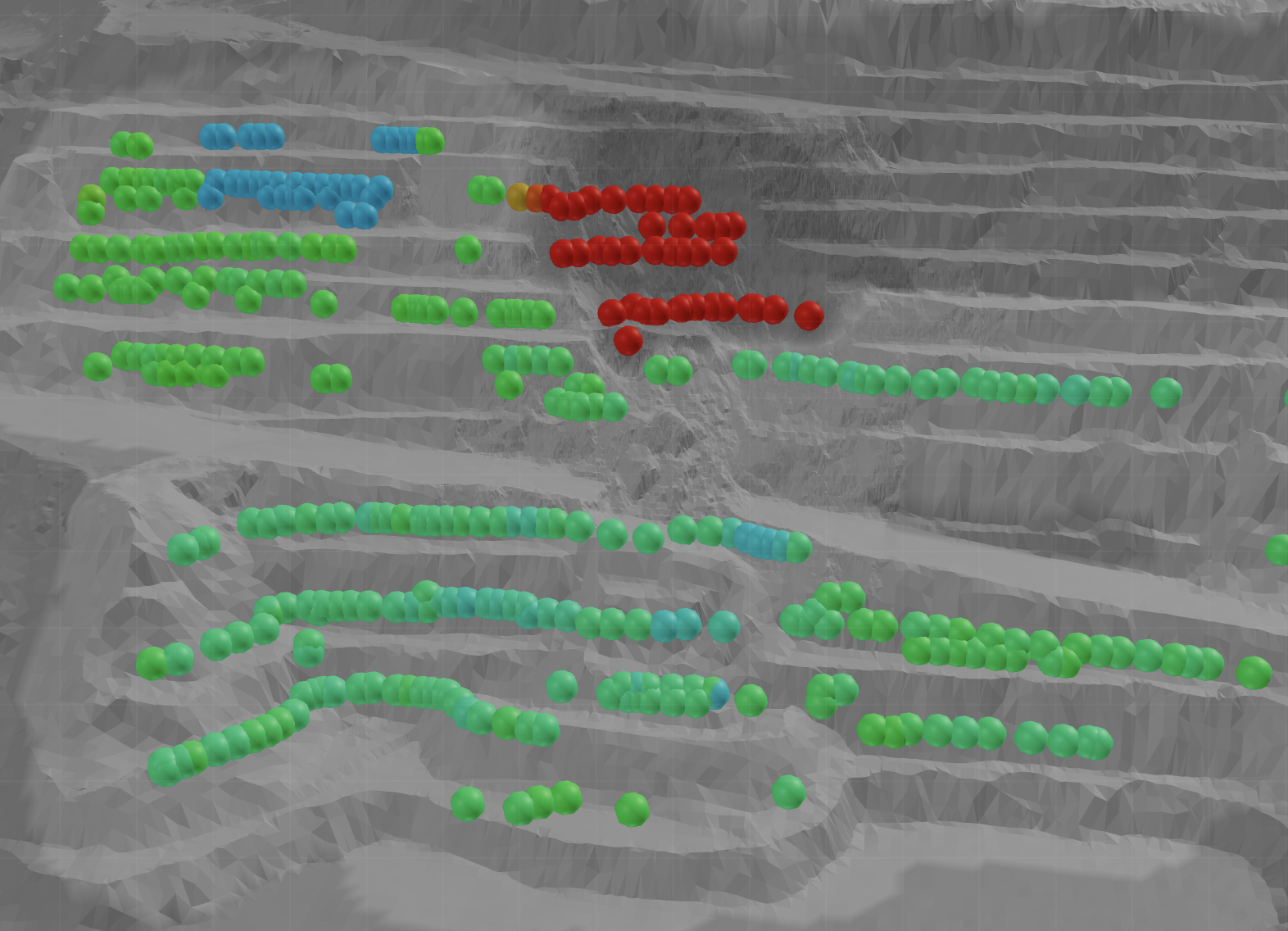
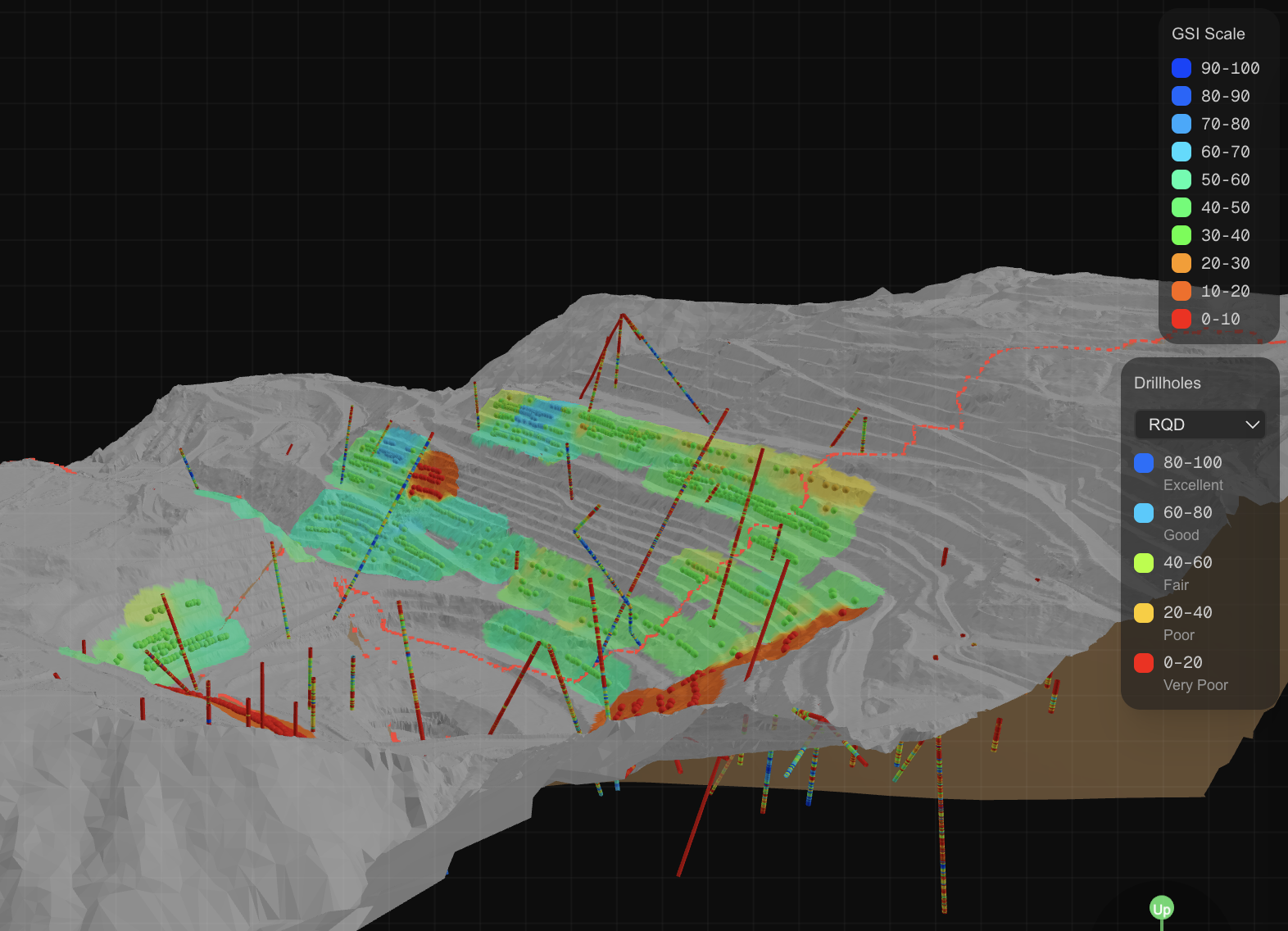
SEAM — the Stratum Embedding Attention Model — turns your mine's imagery into continuous, validated GSI maps of every pit wall, reviewed and controlled by your geotechnical team.
Face mapping depends on reaching the wall. Access limits and safety exclusions leave gaps that widen as pits deepen. And even two experienced engineers rating the same face disagree by ±8 GSI points on average.
SEAM works with the drone imagery your mine already captures — or a standard wall survey flown from safe stand-off distances.
Every bench face is classified on the Hoek–Marinos chart — Structure and Surface — with an attention map showing exactly what the model looked at.
Continuous GSI draped on your live topography. Validate, correct, export reports — every correction makes the model sharper.
SEAM is built on attention — the same mechanism behind modern AI, applied the way a geotechnical practitioner works: scan the whole exposure, weigh what matters, ignore what doesn't, decide.
Instead of one generic model, SEAM trains a dedicated expert for every rock-mass class. Each expert specialises in the visual signature of its own class, scores every patch of the face, and competes to explain it. The result is a rating, a GSI range that reflects real confidence, and a heatmap that shows the evidence.
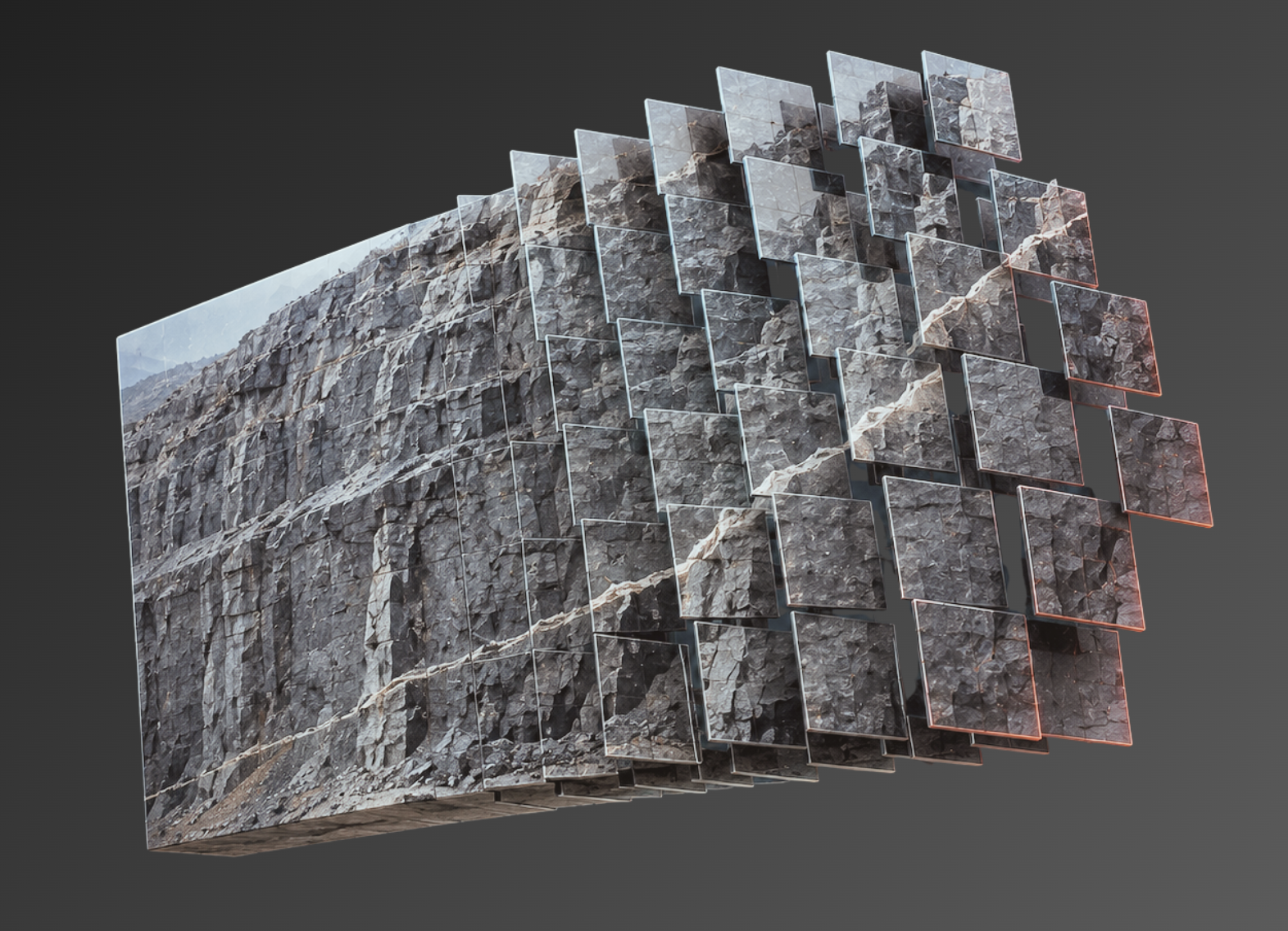
The bench image is cut into hundreds of small overlapping patches, so no fracture is ever missed on a boundary.
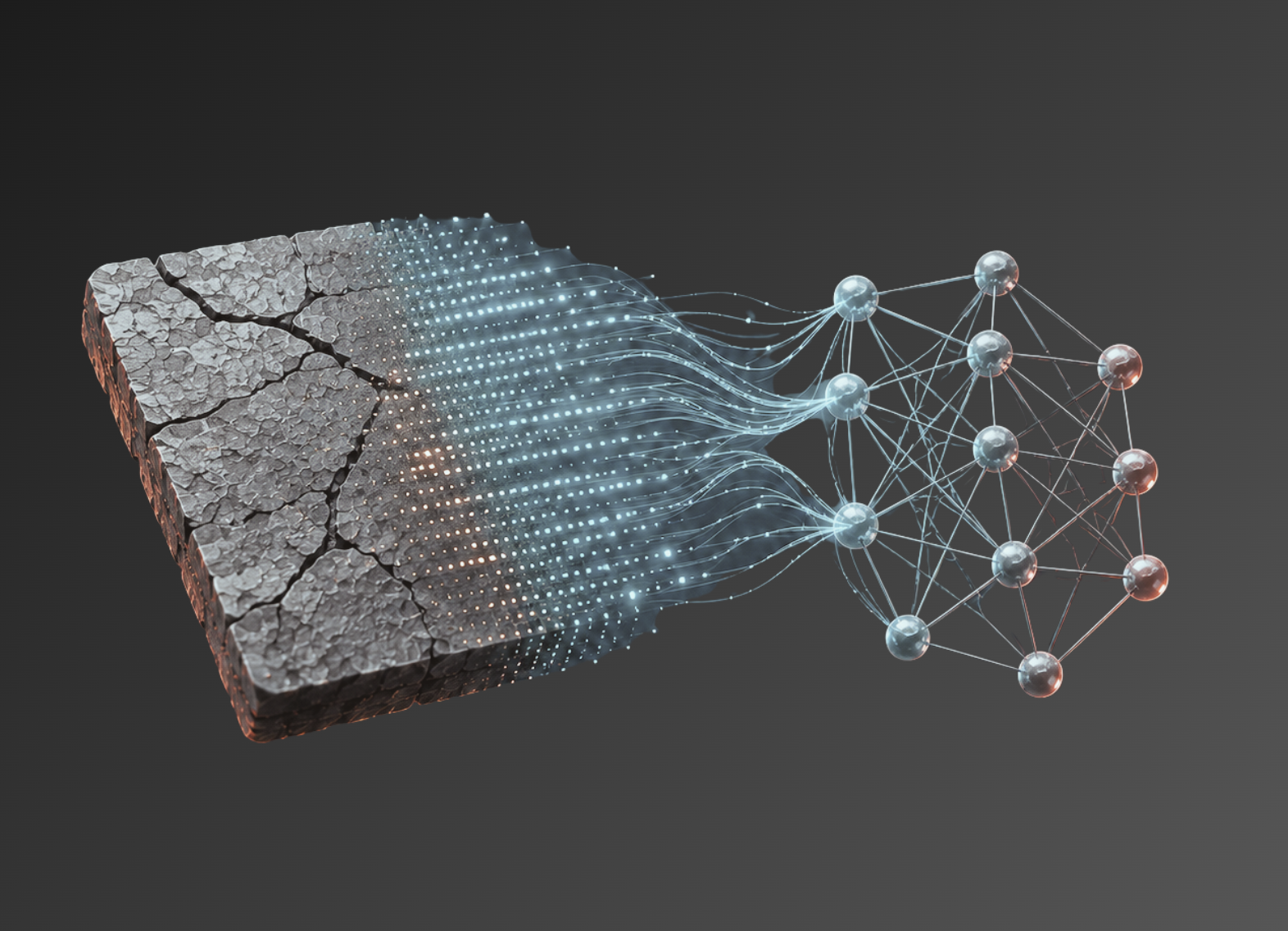
Each patch becomes a numerical fingerprint of its texture, edges and fracture patterns.

Each class has its own AI expert. "Very Blocky" responds to clean fracture patterns, "Disintegrated" to rubble-like surfaces, and "Massive" to unbroken rock. Pipes and debris are ignored.
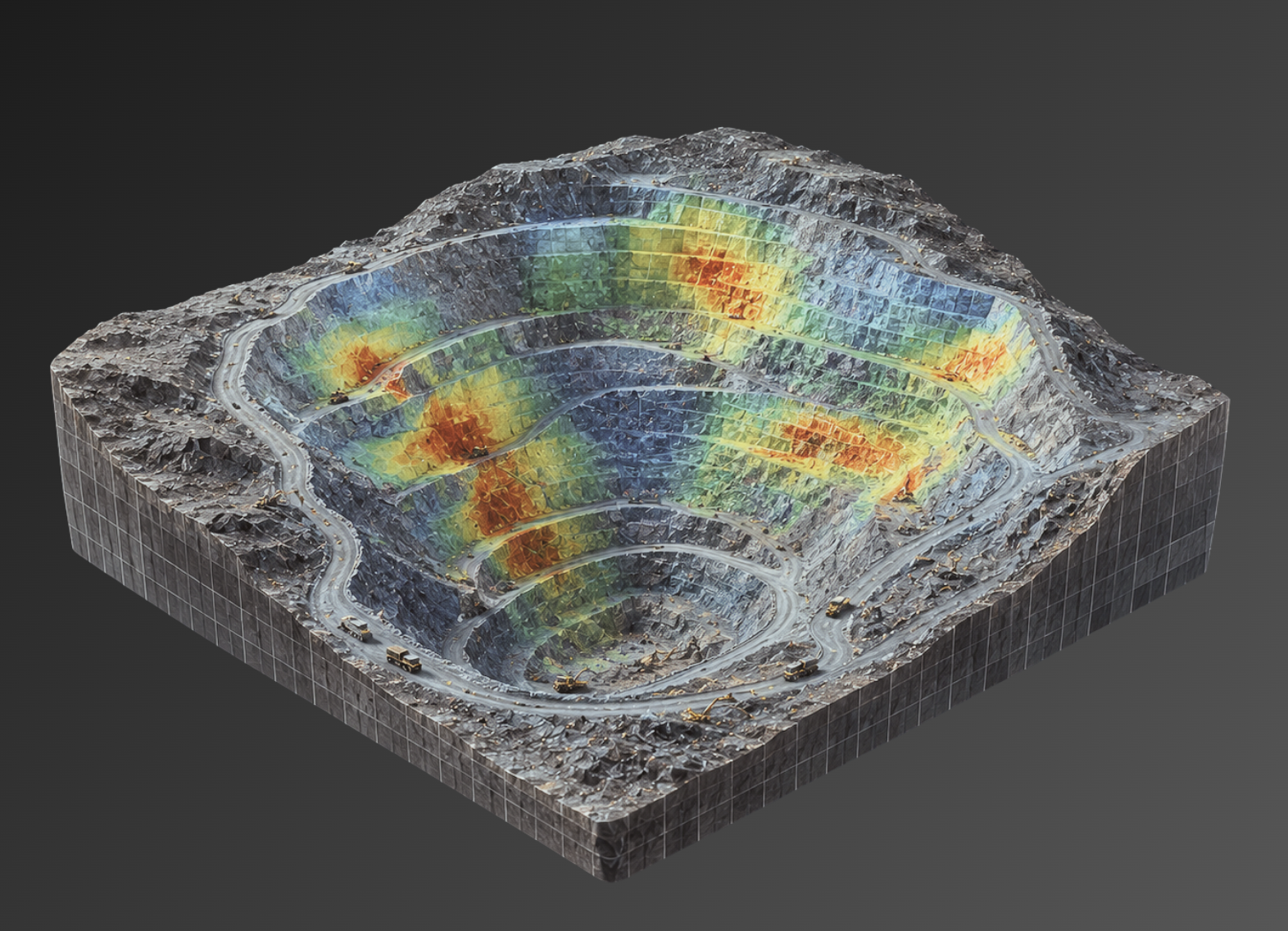
The strongest expert wins. Its confidence becomes a GSI range; its attention becomes the heatmap your engineers review.
Rather than producing hidden black-box predictions, SEAM projects spatial attention heatmaps back onto the original rock face, making it possible to see exactly what drove each prediction.
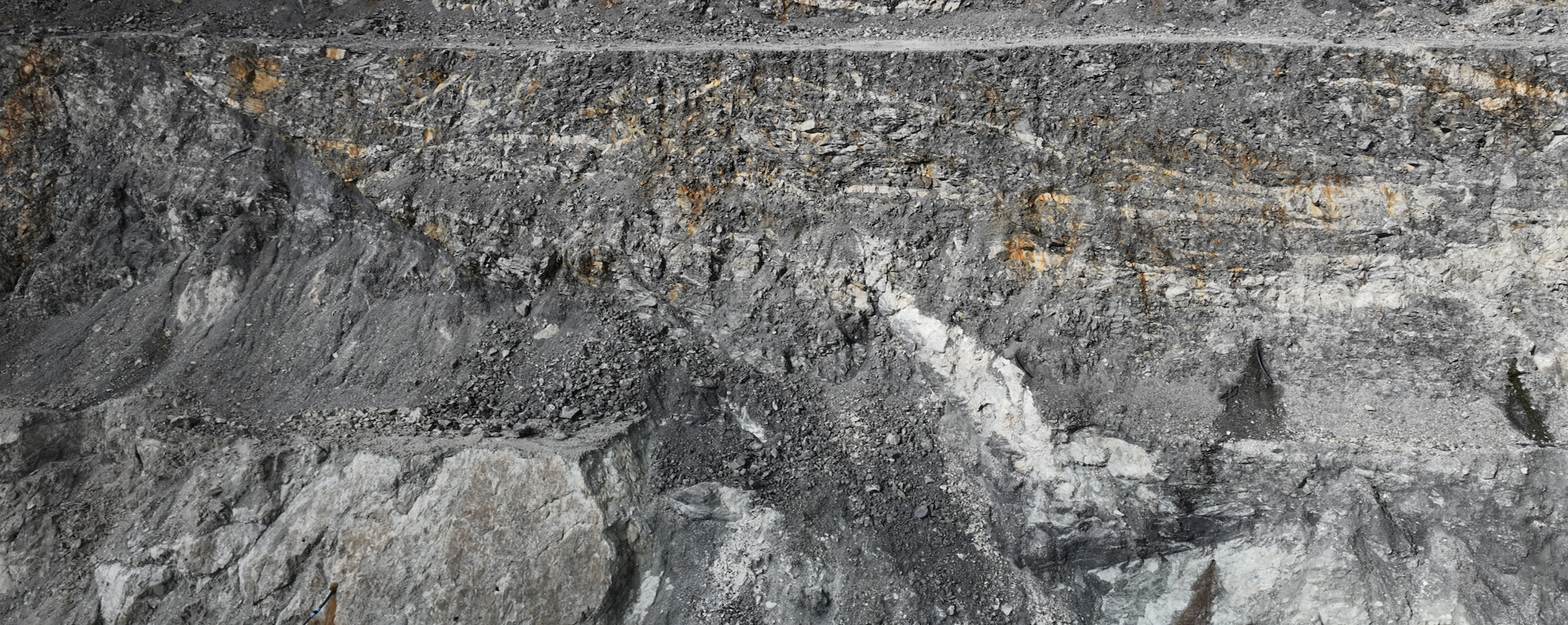
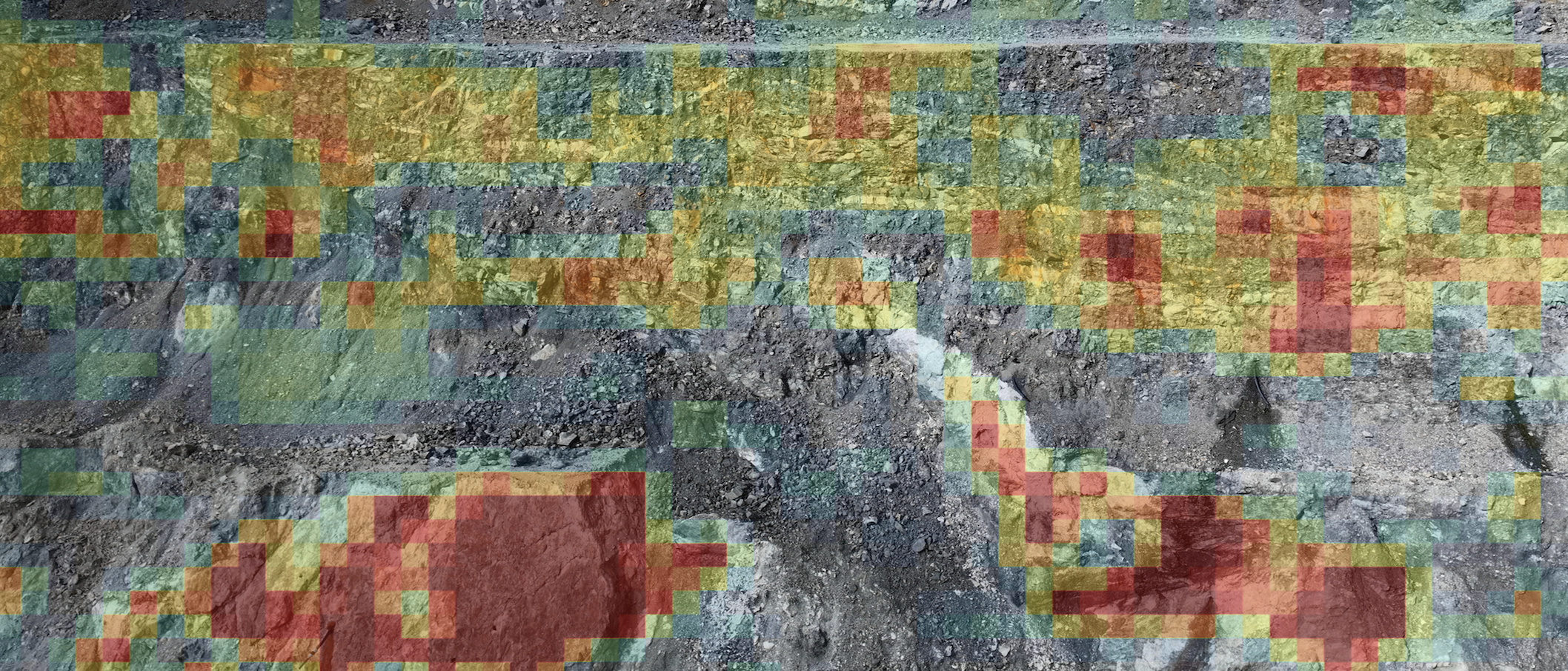
Tested on 465 bench faces the model had never seen, in demanding open-pit conditions — and judged against the ±8-point envelope within which experienced humans already disagree.
of predictions fall within the ±8-point human uncertainty envelope
Structure & Surface accuracy within one-class tolerance
average GSI error — half the human-to-human disagreement
unseen bench faces in the validation set
A short video introducing SEAM and a look at the platform in action.
Your practitioners define, validate and control. SEAM extends their reach across every bench in the pit.
A deployment starts with the imagery you already have and your team's site knowledge.