How data-driven modelling improves decisions across exploration, planning, and processing
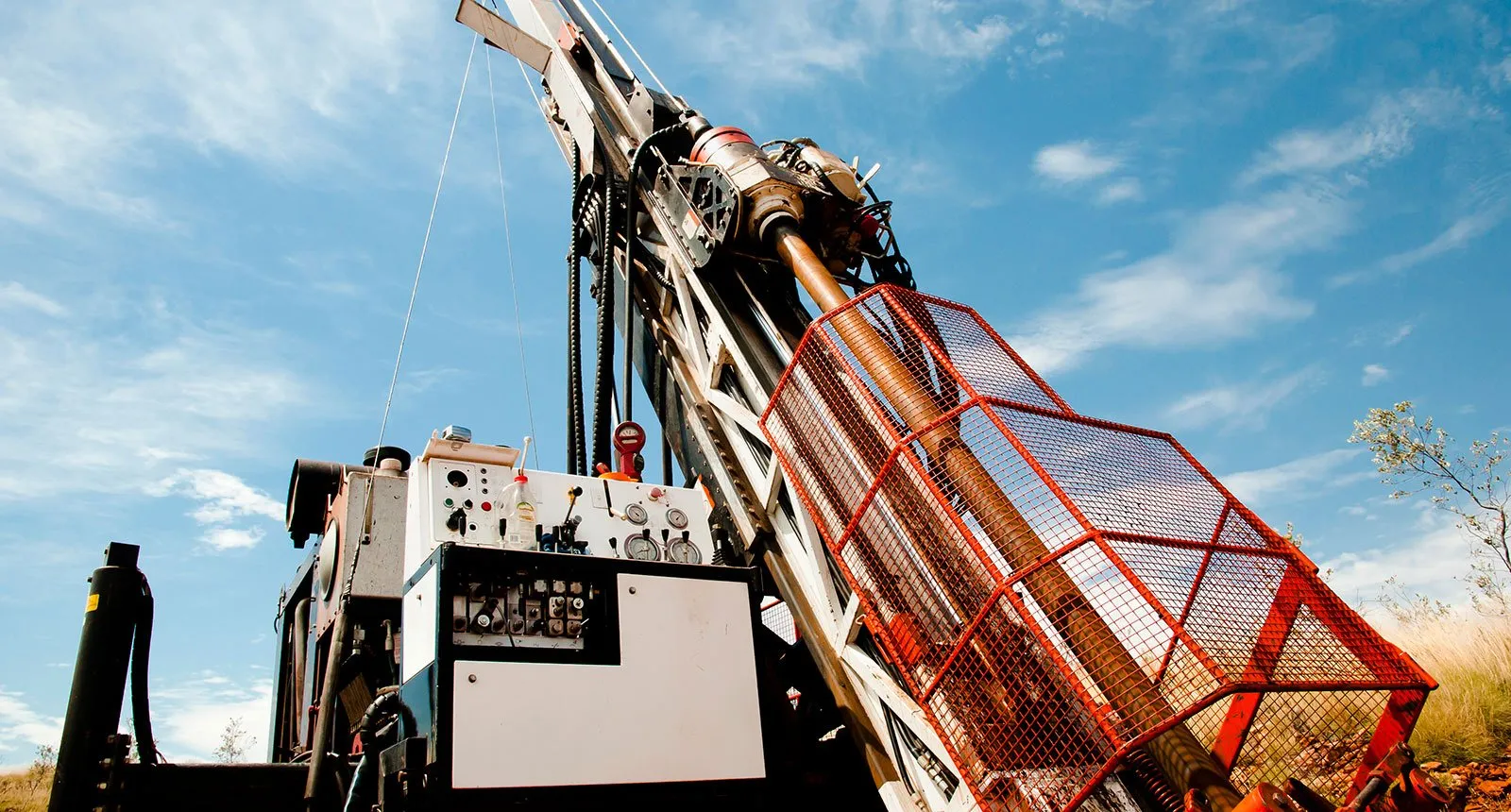
Brownfield drilling is often guided by static interpretations, resulting in low discovery rates and inefficient use of drill metres.
How SAIGE helps
SAIGE learns spatial patterns from historical drilling and extrapolates beyond existing data boundaries. By combining uncertainty analysis with a drillhole simulation tool, SAIGE generates high-confidence drill targets while accounting for infrastructure, economic, and operational constraints.
Decisions improved

Prioritization of drilling under uncertainty

Drillhole orientation and spacing

Where to drill
In high-volume operations, small grade misclassifications can lead to significant reconciliation losses and sub-optimal stockpiling.
How SAIGE helps
SAIGE models metallurgical parameters spatially, in the same way as a resource model. By leveraging multiple data sources and non-linear relationships, SAIGE can estimate parameters even when measurements are limited, while identifying which data inputs most influence prediction quality.

Decisions improved
Processing risk management
Throughput planning
Ore routing
Metallurgical parameters such as ore type and hardness are often sparsely sampled, limiting their use in planning and optimization.
How SAIGE helps
SAIGE models metallurgical parameters spatially, in the same way as a resource model. By leveraging multiple data sources and non-linear relationships, SAIGE can estimate parameters even when measurements are limited, while identifying which data inputs most influence prediction quality.

Decisions improved
Processing risk management
Throughput planning
Ore routing
Polymetallic deposits are frequently simplified to a single primary commodity, leaving secondary elements under-modelled or ignored.
How SAIGE helps
SAIGE simultaneously models multiple elements and learns their non-linear relationships. Correlated elements are used to improve prediction accuracy and to fill data gaps where assays are incomplete or inconsistent.

Decisions improved
Blending and cutoff strategies
By-product optimization
Multi-commodity planning
Traditional classification methods provide limited visibility into uncertainty and risk at the block scale.
How SAIGE helps
SAIGE quantifies uncertainty for every block by propagating prediction errors through the model. Confidence intervals and activation maps highlight areas that most influence model performance, guiding targeted infill drilling and supporting resource confidence upgrades.

Decisions improved
Capital allocation and mine-life planning
Resource classification (Measured / Indicated)
Targeted drilling to reduce risk